

How To Share Cd Drive Over Network Windows 10
"How do you lot share a CD or DVD bulldoze across a network?" This was the question that dropped into my caput recently as it became apparent that I would need to access information on some archive DVDs.
If I was using a standard PC this wouldn't exist a problem; as information technology is, I've been the owner of an Acer Iconia W700 for several months now and one of the primal drawbacks of a tablet figurer is that they don't come with integrated DVD drives.
Now, I do have one way around this problem. Recently I purchased a caddy for an old laptop DVD drive, but I haven't got effectually to putting it together yet. Judging that clicking a few boxes on Windows would be quicker, quieter and less painful at 10pm i evening, I decided to await at the network option.
Surely at that place must be a way to share the DVD drive on my wife'due south laptop across the dwelling house network?
Often, wrestling command of the laptop and the latest Facebook games from the fond claws of Mrs Cawley is a bit of a claiming. Fortunately, 10pm was a good time to attempt it.
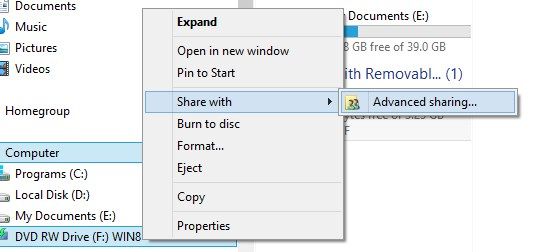
The starting point of sharing a CD or DVD drive beyond a network requires you to first share the device, and so on the computer with the drive you desire to share, open Computer, right-click the advisable drive and select Share with > Advanced sharing….
In the Properties box, click Avant-garde Sharing… and click check the Share this folder option in the following screen. You should then assign a meaningful name ("CD bulldoze" or "DVD drive" both seem particularly rehearsed) and click the Permissions button.
The idea here is to ensure that the drive, once shared, can be accessed. Select the Anybody group and check the box to Read under Allow and click OK to confirm. On a abode network, this should give y'all all of the security you need.
Setting Other Security Options
On a home network, you can disable password-protection on the bulldoze, which by default requires y'all to accept a user account and countersign for the computer with the shared drive.
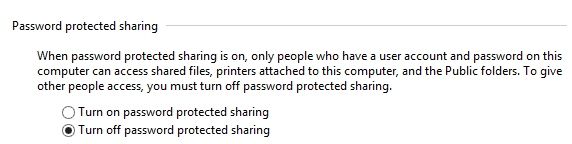
Yous tin alter this in the Properties box on the Sharing tab, under the Password Protection setting – here, click Network and Sharing Centre and click Habitation or Piece of work (electric current contour), expanding the options to find Turn off password protected sharing. Select the option you want (off speeds things up on home networks but yous wouldn't want to make that pick in whatsoever other scenario) and click Save changes.
Annotation that there are many other options here, such as changing the encryption blazon, only the default options are best left lone unless yous understand the consequence changing them will have.
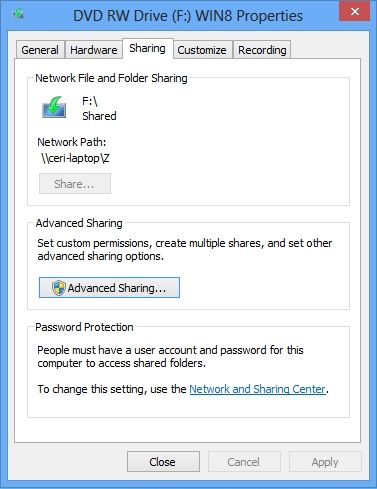
Once you're washed hither, the Backdrop box volition summarise the current sharing details, such as the network path and whether password protection is in utilise. Notation that y'all can disable sharing later by opening the Advanced Sharing… screen and clearing the check in the Share this binder box.
With the optical drive shared, you can now map a connection to it from your own reckoner. The procedure for this is similar to mapping any network bulldoze.
On your desktop or in the Showtime Menu, correct-clickComputer, select Map network drive... and scan for the share you created earlier.
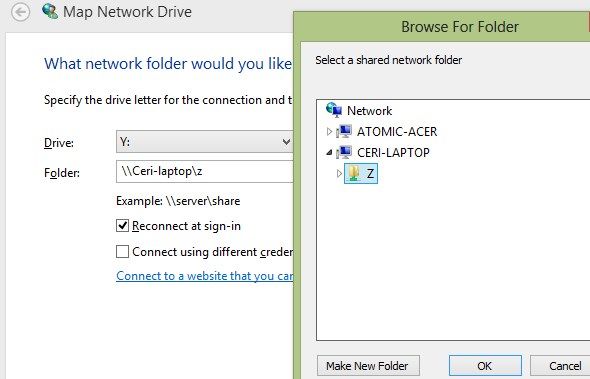
It is possible to map a drive alphabetic character that will be assigned to this drive each fourth dimension you lot showtime your computer. Select the letter y'all want and check the Reconnect at logon box to do this, clicking Stop when you're washed.
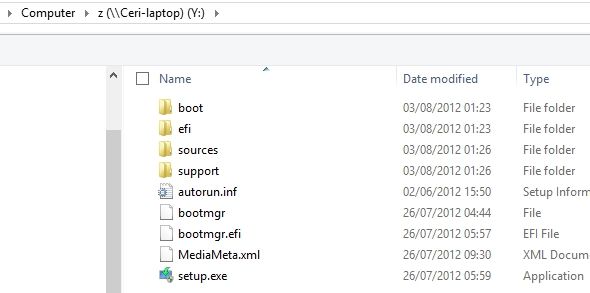
When you lot're ready to access the bulldoze, load the disc into it and then render to your computer, double-clicking the device to begin reading the disc contents.
Alternatives To Sharing A CD Or DVD Drive
Every bit mentioned, there are other ways of connecting a CD or DVD drive to a device that doesn't come equipped with one (such equally a Windows tablet, a MacBook Air or MacBook Pro or even an OTG enabled Android device). Similarly, you might have removed your DVD drive - perhaps from an older Macbook - but still crave the ability to read optical drives from time to time.
While external DVD drives are inexpensive, if you have an old laptop with a standard removable slimline DVD drive y'all will be able to house this in an inexpensive caddy and connect it to your computer via USB.
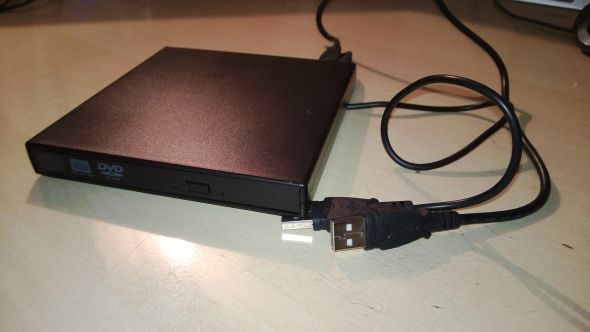
These caddies (like the one pictured which I finally set up) are available for nether $x and can be powered from your computer'southward USB drive or with an external USB-uniform power source. Every bit the housings are manufactured to seat a standardised hardware format (the slimline optical bulldoze), you should notice that they're virtually identical in structure and price.
Note that plumbing fixtures a slimline DVD drive into ane of these caddies is straightforward, but you will need to pay attention to the instructions provided in order to avert problems (such equally the example beingness too tight for the eject office, for example.)
Disposing Of An One-time Laptop – What To Recycle, What To Keep provides more than information for anyone stripping down a laptop for parts.
Conclusion: Sharing Is Proficient, Just Not the Only Fashion
Although the option of having a working DVD drive is useful, optical discs seem to be falling out of favour, with flash drives and other portable solutions taking their place. While we've still got Blu-ray (and the sharing process is just the same equally described above for DVD and CD drives), there will remain a place for optical discs.
Sharing an optical drive beyond a network might just exist the about constructive and economical way of getting around the lack of a suitable device on your own computer, but don't overlook the benefits of an external optical device, whether this is a standard external drive or one cannibalised from an old laptop.
What is your preferred option for connecting an optical drive to a computer or tablet?
Source: https://www.makeuseof.com/tag/how-to-share-a-windows-cd-or-dvd-drive-on-your-network/
Posted by: reynoldsnuthat.blogspot.com
0 Response to "How To Share Cd Drive Over Network Windows 10"
Post a Comment